Farm success often depends on the small decisions you make before the season begins. One of those decisions is installing an owl box in the right location. A well-placed box attracts natural hunters that help reduce gopher activity across your land. A poorly placed box is often empty while pests continue damaging the crops, irrigation lines, and even soil structure.
If your objective is long-term and low-maintenance pest management, then proper planning gives you the best outcomes. The practical guide helps you understand where, when, and how to place owl boxes so your fields gain the largest protection with less ongoing effort.
Evaluating Your Land’s Pest Hotspots
Mapping the Problem
Before placing any box, you should walk through your property and identify the areas with the largest gopher activity. Fresh soil mounds, damaged roots, and weakened irrigation systems often point to active burrows.
Pay close attention to:
- Alfalfa fields
- Orchards
- Market garden plots
- Open forage areas
- Field edges near natural hunting space
Mark these locations before choosing installation points. This preparation helps you position boxes where hunting birds naturally spend more time.
Natural Biological Suppression
Creating habitat for hunting owls gives you reliable organic pest control for garden production and larger agricultural fields. Instead of depending on repeated labor or chemical treatments, you should encourage a natural predator working throughout the growing season.
Owls hunt mainly at night when gophers are active. Once breeding pairs settle nearby, they continue searching the surrounding fields for food. This creates continuous pest suppression without adding daily work to your schedule.
Step-by-Step Field Execution
Height & Angle
Successfully installing an owl box depends on proper placement rather than simply choosing an empty location.
For the best outcomes:
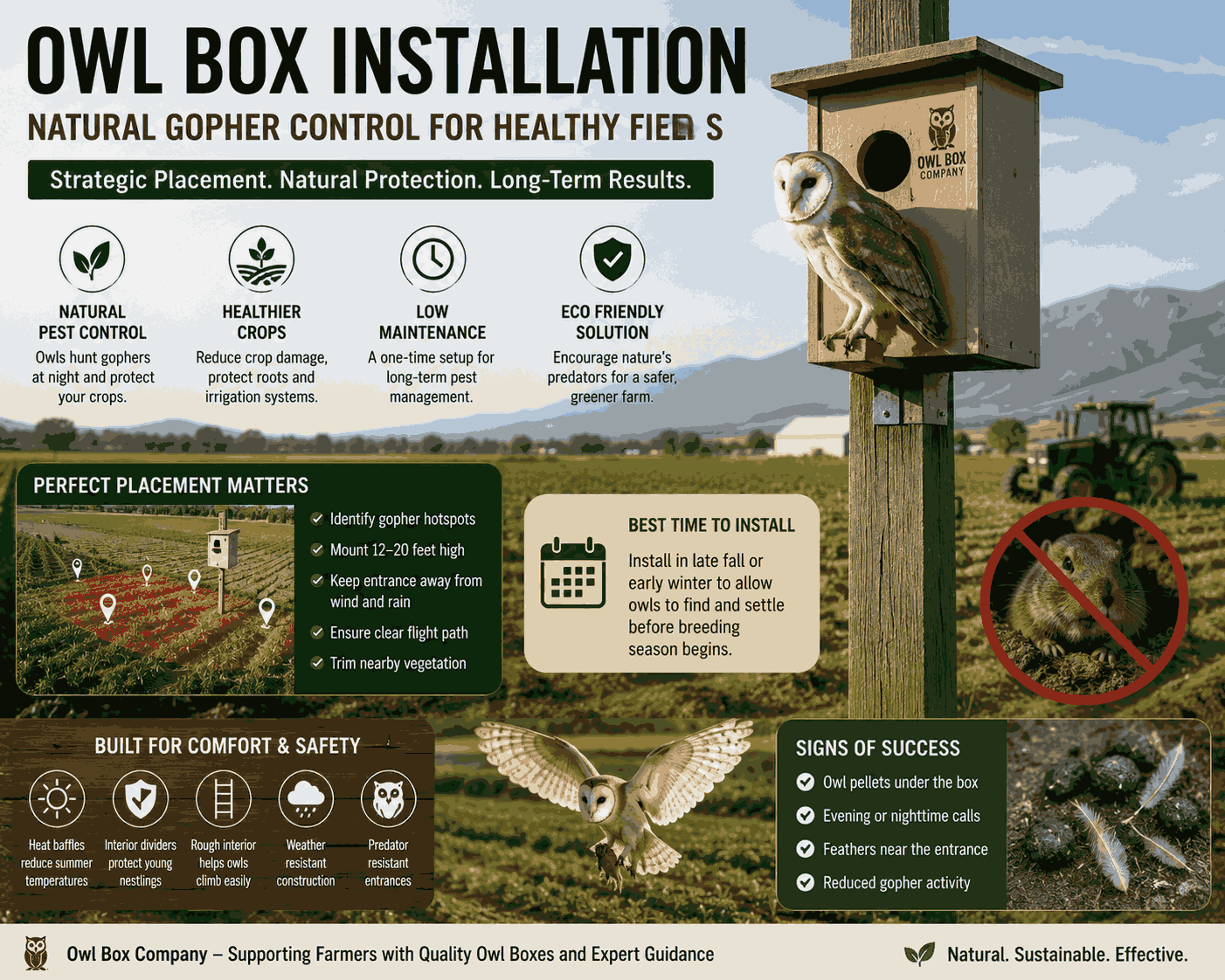
- Mount the box 12 feet to 20 feet above ground.
- Keep the entrance away from strong wind and direct rain.
- Leave a proper flight path with no branches or obstacles.
- Keep nearby vegetation trimmed to improve visibility.
Proper height and open access help the owls to enter and leave safely while increasing the chance of advanced occupancy.
Pole Mounting vs. Structure Mounting
Choosing the right support system depends on your land layout.
Standalone steel poles work well in large open fields because they provide excellent visibility from every direction. They also allow you to place boxes closer to active gopher zones.
Buildings such as barns, equipment sheds, or other farm structures provide stable mounting locations where open space is available around the entrance.
Both options help in productive barn owl box installation when they provide security, stability, and unobstructed flight access. Pick the method best matching the working conditions of your property while allowing easy future maintenance.
Ensuring Long-Term Success and Safety
Preventing Heat Buildup & Predators
A quality owl box protects both adult birds and young nestlings throughout the breeding season.
Look for features such as:
- Heat baffles that reduce summer temperatures
- Interior dividers for added nestling protection
- Rough interior climbing surfaces
- Strong weather-resistant construction
- Predator-resistant entrances
These design details improve nesting success while reducing risks from weather and unwanted visitors.
Professional products from Owl Box Company include practical features that support long-term durability and dependable field performance.
Seasonal Timing
Timing plays an important role in attracting nesting pairs.
Complete your owl box installation during late fall or early winter whenever possible. This schedule allows owls to discover suitable nesting sites before the spring breeding season begins.
Early preparation gives birds time to establish territory before crop growth reaches full production.
Measuring the Impact on Your Fields
Evidence of Success
After installation, monitor the area for signs that owls occupy the box.
Common indicators include:
- Owl pellets beneath the box
- Evening or nighttime calls
- Feathers near the entrance
- Regular flight activity
- Fewer fresh gopher mounds
These signs show that natural rodent control is becoming established across your property.
Continue observing the surrounding acreage over the following months to measure changes in pest activity.
Long-Term Economics
As owl populations become established, your investment continues delivering value year after year.
Strategically placing owl boxes for gopher control helps reduce:
- Crop damage
- Root loss
- Irrigation repairs
- Soil disturbance
- Manual gopher removal
Lower maintenance needs save valuable labor hours while protecting crop production and water efficiency. Over time, the natural rodent management helps in healthy fields with fewer recurring pest problems.
Conclusion: Turn Your Acreage Into an Owl Haven
Each successful field management plan begins with proper preparation. Picking the correct location, installing good equipment, and following seasonal timing all improve your chances of attracting owls, naturally decreasing rodent populations.
When you focus on precision while installing an owl box, you create lasting benefits for your crops, irrigation systems, and total field health. With durable products and practical designs from Owl Box Company, you can build a dependable habitat that supports natural pest control season after season.
Ready to Strengthen Your Fields Naturally?
Give your farmland a reliable, long-term advantage with professionally designed owl boxes. Explore field-ready solutions from Owl Box Company and create a safer, more productive environment through natural rodent management today.
Contact us by calling on: 559-352-8067 or emailing theowlboxcompany@gmail.com today because every properly placed owl box helps you build a stronger, more sustainable farming system while reducing gopher pressure season after season.
FAQs
- What is the best height for an owl box?
Keep the box between 12-20 feet above the ground with a proper flight path for easy access.
- When should you install an owl box?
From fall through the start of winter is the ideal time because nesting pairs begin looking for the best locations before spring.
- How much time does it take for owls to occupy a new box?
The occupancy depends on the habitat and the prey availability. It also depends on how the box is positioned, so some sites get owls faster while others take a bit longer.
- Can one owl box protect large agricultural fields?
One box can cover a significant hunting area, but larger properties often benefit from multiple properly spaced boxes.
- Do owl boxes need regular maintenance?
Yes, you should inspect the box annually, remove old nesting material when appropriate, and check that the structure is secure and weather-resistant.