You notice the problem before you ever actually see the culprit responsible for it. A few fresh gopher mounds show up near the field. Then another section starts showing damage too. Before long, you’re spending real time and money trying to protect crops and soil from rodents that just keep coming back no matter what you try.
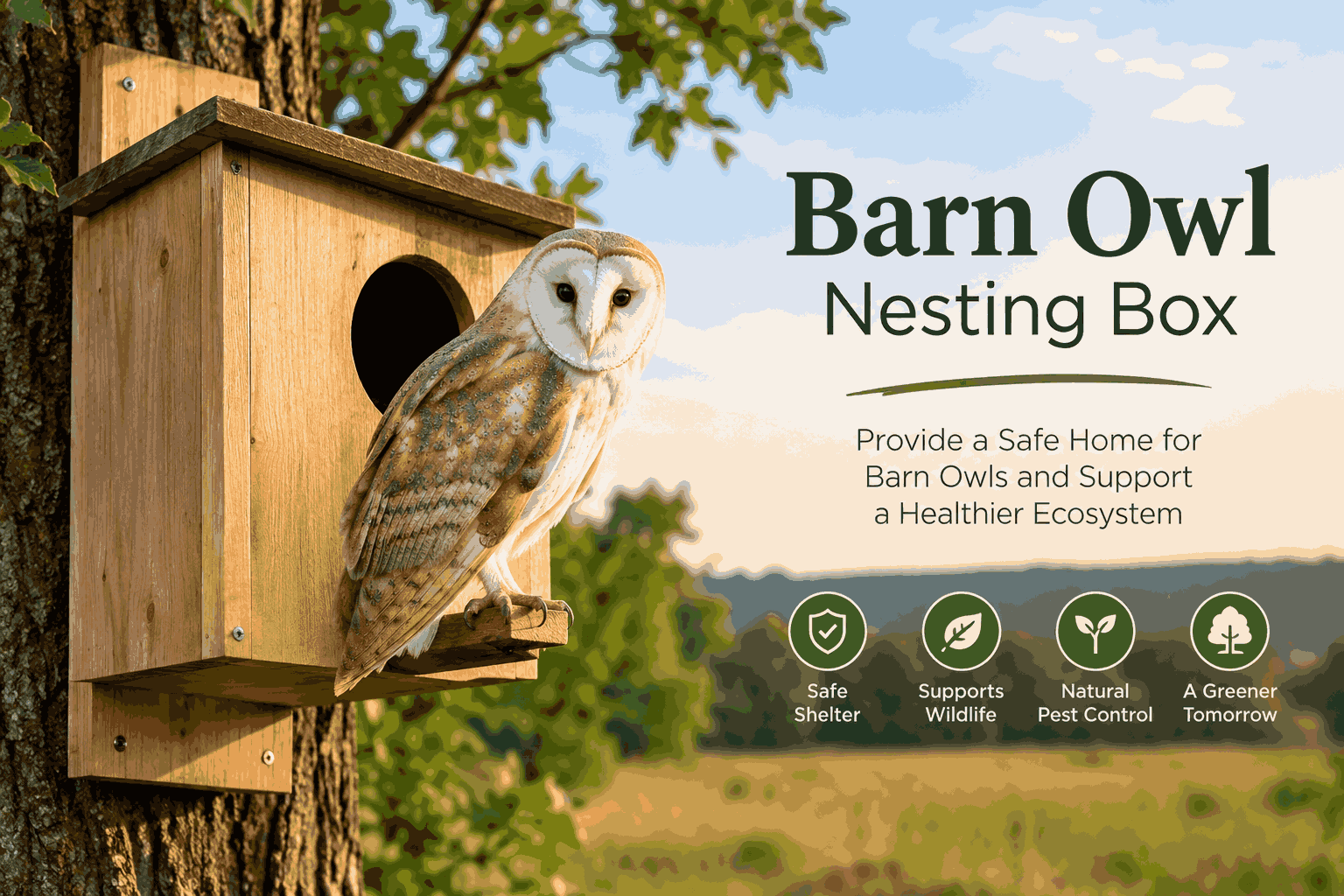
A Barn Owl Nesting Box offers a genuinely different approach. Instead of leaning entirely on chemicals or repeated trapping, you create a nesting space that encourages wild barn owls to actually settle nearby on their own. These natural hunters help manage gophers and mice. Folding neatly into a more sustainable approach to farm and land management overall.
Why Barn Owl Boxes Work Naturally
Barn owls are cavity-nesting birds that hunt small rodents, which makes them genuinely natural partners for agricultural properties dealing with persistent pest pressure. When a suitable box goes up somewhere food’s already available, owls can move in on their own, no capturing or relocating required.
That distinction matters more than people realize at first. You’re not buying an owl and placing it inside the box like a pet. The box just provides a safe, artificial nesting site. Given the right conditions, wild barn owls tend to find it themselves.
For farms, vineyards, and ranches, that creates a genuinely interesting balance. You provide the habitat. The owls handle the rest, doing exactly what they’d do anyway.
Choosing The Right Owl Box For Barn Owl
An owl box for barn owls needs real design consideration around the bird’s habits and safety, not just a basic wooden box nailed to a post and left alone.
The boxes provided by the service are built for California conditions specifically, using durable materials and features meant to actually support nesting. Proper ventilation, drainage, entry sizing, and predator protection all matter here, working together toward a genuinely suitable nesting environment.
Placement matters just as much as construction, honestly. The box needs a clear flight path and should sit away from excessive disturbance. Elevated installation also cuts down on access from ground-based predators looking for an easy meal.
So where should you actually put one? Really depends on your land. A professional site assessment makes that answer a lot clearer than guessing.
Searching For A Barn Owl Box Near You?
If you’re searching for a Barn Owl Box Near You, you probably already have a rodent problem that needs real attention- not just curiosity about the concept.
Instead of picking a location purely on convenience, look at where the rodents are actually active. The installation service includes a farm, vineyard, or ranch survey to identify suitable box locations, factoring in terrain, crop patterns, rodent activity, and access before anything actually goes up.
This matters especially on larger properties. One box might cover a limited area just fine, while bigger acreage often needs multiple boxes to create real, broader coverage.
The important part was never just having boxes on the property. They need to actually sit where barn owls can comfortably access them and hunt nearby, not wherever’s easiest to install.
How Owl Boxes For Gopher Control Help
Using Owl Boxes For Gopher Control brings genuine natural predation into your pest management plan. Barn owls primarily hunt small rodents including gophers, voles, rats, and mice, and that hunting activity can continue without you constantly reapplying chemical treatments.
The service also offers strategic placement for agricultural properties, with multiple boxes possible across larger areas depending on the property’s size and how much rodent pressure it’s actually dealing with.
That said, don’t expect every gopher to vanish overnight. Barn owls are wild animals- not a switch you flip. Their activity depends on food, habitat, nesting conditions, and everything else in the surrounding environment.
Still, building suitable habitat gives you a genuinely long-term natural control option worth pursuing.
Could Organic Pest Control For Garden Work?
If you’re interested in Organic Pest Control For Garden areas specifically, barn owl systems can complement a broader & low-impact pest management strategy pretty well. This approach avoids introducing rodenticide into the owl’s food chain. It cuts down on how much you’re relying on chemical controls overall.
That’s genuinely appealing if you want to protect plants while also being mindful of the wildlife around your property.
Not every garden will actually need an owl box, to be fair. These systems fit best on properties with real open hunting space and a natural rodent supply already present. A site assessment helps figure out whether the approach actually makes sense for your specific setup.
Installation Requires More Than A Hammer
Installing a box looks simple enough from the ground. In practice, height, orientation, stability, and access all shape whether the box ends up actually useful or just sitting there empty.
The professional installation service evaluates the location carefully before securing anything. Recommended installations might use sturdy poles, barns, or suitable trees depending on the site conditions, with clear flight access factored in throughout.
The box needs to stay stable through changing weather, and it should sit somewhere regular human or machinery activity doesn’t create unnecessary disturbance for nesting owls.
That kind of upfront preparation saves you from having to move the box later, once you realize it went up somewhere that just wasn’t working.
Keep Your Owl Box Ready
Once the box is up, your job isn’t quite finished. Basic maintenance keeps the nesting space genuinely suitable for owls coming back season after season.
The service recommends cleaning boxes annually, or every two years after nesting season wraps. The suggested window’s between October and November. Pine wood shavings can go in afterward, though cedar shavings should be avoided since they may irritate young owls.
Poison bait should also be avoided whenever barn owls are actively using the property. An owl can get exposed after eating a poisoned rodent, which defeats the whole purpose. Trapping and other compatible integrated pest management practices are worth considering instead.
A Practical Choice For California Farms
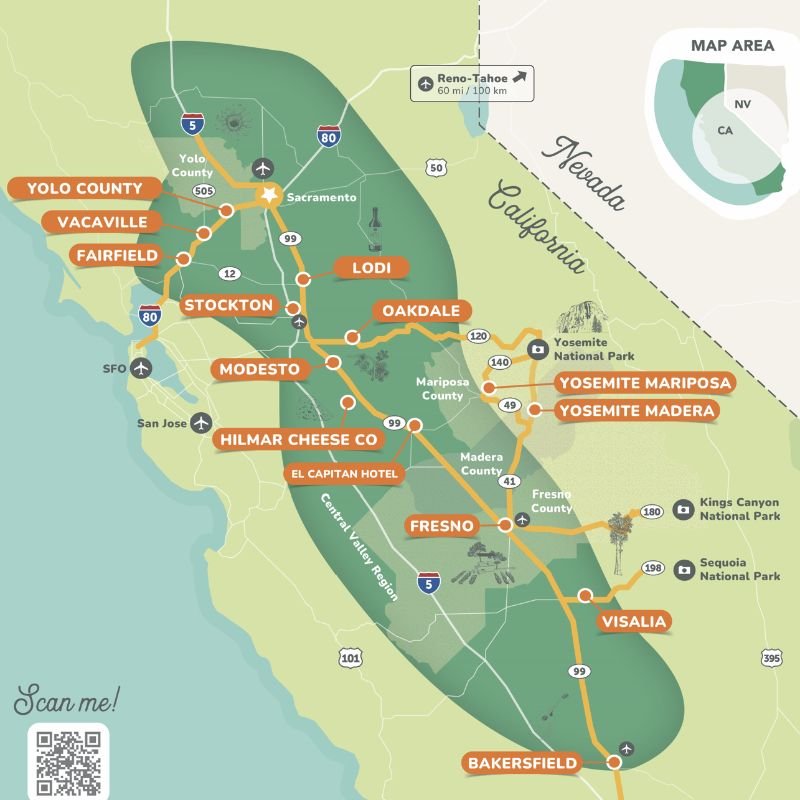
Barn owl boxes work well across farms and ranches throughout Central California. The service area stretches from Sacramento to Bakersfield and out toward the coast.
Every property’s laid out differently. Orchards have different conditions than vineyards. Open fields see different flight patterns than ranchland does. That’s really why a property-specific plan makes a lot more sense than just copying whatever the neighboring farm did.
A no-charge consultation lets the team actually visit your property and survey possible locations before anything gets installed.
Conclusion
A Barn Owl Nesting Box gives you a genuinely practical way to invite natural rodent control onto your property. With custom box construction and ongoing maintenance guidance, ranchers build suitable habitat for barn owls. Planned properly, the system becomes a real, useful piece of your long-term pest management strategy.
Start Your Barn Owl Box Project Today
Want to explore natural rodent control for your property? Contact Owl Box Company at 559-352-8067. Request a no-charge farm consultation to talk through your land, your rodent concerns, and suitable locations for professional owl box installation.
FAQs
- Do I need to buy a barn owl with the box?
No. Barn owls are wild and protected. So they can’t be purchased or relocated like livestock. A properly positioned box just provides suitable nesting habitat. If food and surrounding conditions are genuinely favorable, wild barn owls tend to find and occupy it on their own.
- Where should I install a barn owl box?
Placement needs a clear flight path while limiting disturbance and predator access. The service recommends elevated installation and factors in terrain, rodent activity, crop patterns, and surrounding conditions before landing on a final location.
- Can owl boxes replace every other pest control method?
Not necessarily. Barn owl systems really work best as part of an integrated pest management approach. Traps and cultural practices can be used alongside them, but poison baits should be avoided, since poisoned rodents can genuinely harm the owls hunting them.