
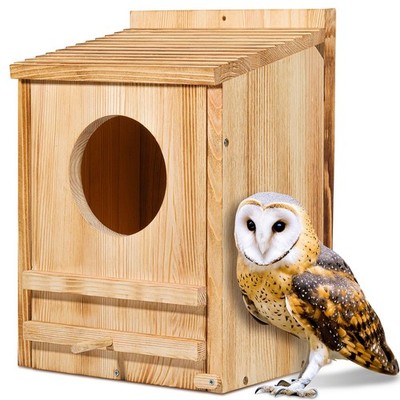
Late at night, when most fields look completely still, nature is quietly working behind the scenes. Barn owls glide silently across farmland searching for rodents, gophers, and other pests that damage crops and property. It’s actually surprising how much impact a single owl family can have. That’s one reason more landowners are installing a barn owl nesting box as part of their natural pest management strategy.
Chemical pest control methods can become expensive over time, and many property owners now want safer, eco-friendly alternatives. Barn owls offer a natural solution that works continuously without disturbing the balance of the environment. And honestly, watching a barn owl settle into your property feels rewarding in a way traditional pest control never does.
Nature’s Silent Pest Control Team
Barn owls are incredibly effective hunters. A single barn owl family can consume thousands of rodents during nesting season. Mice, rats, voles, and gophers all become part of their regular diet.
That’s why many farmers and rural property owners searching for gopher control services near me are turning toward owl habitats instead of relying entirely on traps or chemicals. Encouraging owls to nest nearby creates long-term natural pest management that continues season after season.
Rodent populations often grow quickly in open agricultural areas. Left unmanaged, they can damage crops, irrigation systems, barns, and storage spaces. Barn owls help reduce those issues naturally while supporting a healthier ecosystem.
Why a Proper Barn Owl Nesting Box Matters
Barn owls do not typically build nests the way smaller birds do. Instead, they prefer sheltered cavities where they can safely raise their young. Unfortunately, modern construction and changing landscapes have reduced many of their natural nesting locations.
Installing a well-designed barn owl nesting box gives these birds a safe environment to live and breed. Placement, size, ventilation, and protection from predators all play important roles in attracting owls successfully.
A poorly designed box may never attract nesting owls at all. That’s why professionally crafted nesting boxes are often more effective than generic DIY alternatives. Proper installation also matters. Barn owl boxes usually perform best when mounted in open areas with clear flight access and limited disturbance nearby.
The Role Of An Owl Box For Barn Owl Habitats
A quality owl box for barn owl populations creates a dependable shelter while supporting local wildlife conservation. Barn owls prefer quiet spaces away from excessive human activity, making farms, vineyards, ranches, and open rural properties ideal locations.
These boxes are specifically designed with dimensions that match the needs of barn owls. Entry holes, drainage systems, interior space, and weather protection all help improve nesting success rates.
Many landowners are surprised by how quickly owls may begin exploring properly placed boxes. Sometimes activity appears within months. Other times it takes longer, depending on local owl populations and habitat conditions. Patience is important. Once established, however, barn owls often return to the same nesting areas repeatedly.
A Safer Alternative To Constant Chemical Use
Traditional pest control methods can create concerns for families, pets, livestock, and surrounding wildlife. Rodenticides may unintentionally harm non-target animals, including birds of prey themselves.
That’s why some property owners searching for a rodent control service near me now prefer combining professional pest management with natural predator support. Barn owls help reduce rodent activity without introducing harmful chemicals into the environment.
This approach creates a more balanced system overall. Instead of constantly fighting nature, you begin working with it. And really, there’s something satisfying about solving a problem naturally instead of relying entirely on toxic solutions.
How A Barn Owl Nest Box Supports Agriculture
Farmers deal with enough daily challenges already. Crop damage from rodents only adds more frustration and financial loss.
A strategically placed barn owl nest box can help reduce pest pressure around barns, storage facilities, orchards, and agricultural fields. Since barn owls hunt primarily at night, they actively target rodents during peak activity hours.
This ongoing hunting behavior helps lower rodent populations gradually over time. While owl boxes may not completely eliminate pests alone, they become a valuable part of integrated pest management strategies.
For vineyards, orchards, and organic farms especially, natural pest control methods are becoming increasingly valuable.
Choosing the Right Location Matters
Placement affects success more than many people realize. Barn owl boxes should generally face open hunting areas where owls can easily locate prey. Quiet surroundings and reduced predator access also improve nesting potential.
Boxes mounted too low or too close to busy roads may discourage activity. Height, stability, and weather protection all influence whether owls decide to settle there.
Professional guidance can help property owners avoid common installation mistakes. Proper positioning often makes the difference between an unused box and an active nesting site.
Long-Term Benefits Beyond Pest Control
Barn owls contribute more than rodent management alone. Supporting local owl populations also helps preserve ecological balance within rural environments.
Children and families often become fascinated watching owls return season after season. These birds create a stronger connection between people and nature, especially in agricultural communities where wildlife interactions still matter deeply. A nesting box becomes more than a tool. It becomes part of the landscape itself.
Conclusion
Using a barn owl nesting box offers property owners a practical and environmentally responsible way to support natural pest control while helping local barn owl populations thrive. From reducing rodent activity to creating healthier ecosystems, barn owls provide long-term value that extends far beyond traditional pest management methods.
Owl Box Company designs durable nesting boxes built specifically to support successful barn owl habitats in farms, vineyards, ranches, and rural properties. Their carefully crafted solutions help landowners encourage natural rodent control while promoting sustainable wildlife conservation in a meaningful and effective way.
Support Natural Pest Control on your Property
Ready to install a professional barn owl nesting system on your land? Contact Owl Box Company today for durable owl nesting boxes and expert placement guidance. Email theowlboxcompany@gmail.com to learn more about sustainable rodent management solutions for your property.
FAQs
Barn owls are highly effective natural predators. A single owl family can consume thousands of rodents annually, including mice, rats, and gophers. Installing a properly placed nesting box helps encourage long-term rodent control without relying entirely on chemical treatments or traps.
A barn owl nesting box should typically be mounted in open rural areas with clear flight paths and minimal human disturbance. Proper height, weather protection, and predator safety all help improve nesting success and attract barn owls more effectively over time.
Barn owl boxes help reduce rodent populations naturally, but they work best as part of a broader pest management strategy. Many landowners combine owl habitats with other environmentally responsible methods for stronger long-term rodent and gopher control results.